
The Dopamine Trap
On AI, abundance, and the false sense of creative fulfillment we're experiencing

Agents for Everything
We’ve all seen it online. There’s a new one every day. An end-to-end productivity agent that reads your emails, summarizes your Slack, and writes your meeting notes into a Google Sheet, saving you a full four minutes a week.
A calendar optimizer. A mood tracker. A habit scorer. An agent that builds agents.
Maybe it’s my own fault for the accounts and podcasts I’ve followed online. But more than ever before, it’s getting impossible to separate the real advances in AI from the endless wave of wrappers solving problems that don’t exist.
Codex and Claude Code have made it easier than ever to go from 0 to 1. They’re powerful tools that have made it immensely easier to create software, aided by a never-ending stream of venture funding that has subsidized token limits generous enough such that the real cost of building never reaches the people doing the building.
And with immense ease comes immense abundance. Abundance of builders, startups, products, features, integrations, and slop.
Abundance of GitHub profiles with 95 active repositories and 95 total commits.
And an abundance of tech influencers convincing their followers that every model update is going to reshape civilization as we know it. Playing into a growing fear that if you’re not keeping up with what today’s models can do, you’ll be left behind.
Sorted into an underclass of people who failed to adapt, sharing bunk beds in unemployment hell with the even more miserable group on the other side: the activist bands who reject all use of AI, because of automation displacing workers, data centers destroying the planet, and corporations consuming our data without consent.
Don’t mistake my sarcasm for ignorance.
The vast majority of the world, whether by financial circumstance, lack of interest, or active protest, has no idea how fast AI has moved in the last six months. And the gleeful takes online parading this wave as a bubble tend to come from the people most unaware of what the technology is capable of doing today.
But here's what surprised me when I looked at the numbers. Codex recently crossed 5 million users. That sounds significant until you realize it’s under 1% of ChatGPT's 900 million weekly active users, the most mainstream AI application in the world. And yet among professional software developers, Codex and Claude Code adoption is already close to 70%.
The easy conclusion is that these tools are hyper-concentrated among a technical elite. Developers with CS degrees and cushy tech jobs, living in terminals, pushing commits, people who would have been coding anyway. A niche corner of the job market that just happens to be very loud on social media.
But that conclusion falls apart pretty quickly. Because sitting alongside Claude Code and Codex is an entirely different layer of the ecosystem: Vercel, Lovable, Bolt, Replit, Cursor. Tools built for the product manager, the designer, and unfortunately the worst type of non-technical tech bro who routinely spends 20 hours a week one-shotting agent workflow integrations on Claude and advertising them on LinkedIn and Substack. Over 60% of people building with AI today have never written a line of code in their lives, and increasingly, they won’t need to.
The vibe coding ecosystem is responsible for the thousands of wrappers you see online every day, but ironically they are wrappers themselves. They take the same underlying GPT and Claude models and package them in interfaces accessible enough for anyone with a laptop and a half-formed idea, even though Codex and Claude Code are already accessible enough to do exactly that. And the vibe coding tools have thrived, because the TAM of developers isn’t CS graduates anymore. It isn’t even knowledge workers. It’s everyone.
And over the past few months, I’ve realized I’m not exempt from it. I’ve been a prisoner to what I call dopamine abundance.
The pull to build something. The restlessness of having an idea and knowing, for the first time, that nothing is stopping you. The dopamine hit of watching five agents do something you couldn’t have ever done alone.
And it made me ask a question I haven’t been able to shake.
Is the dopamine real?
Two Kinds of Dopamine
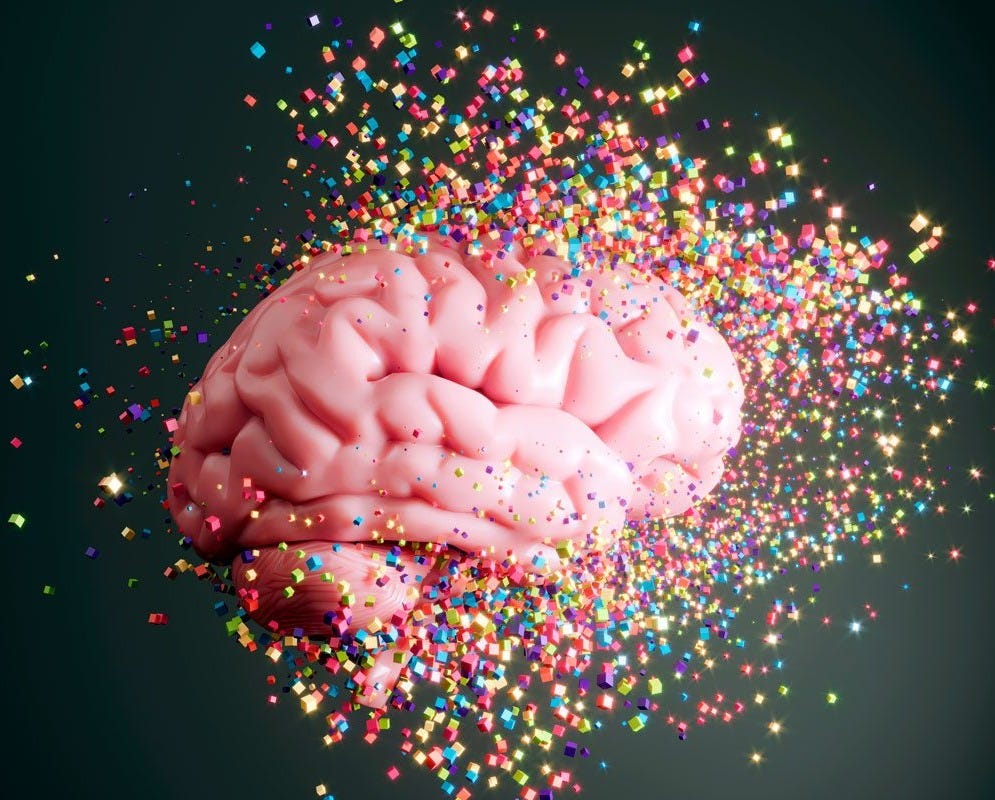
Dopamine is always real. But not all dopamine is wired the same.
Passive dopamine is the kind most of us are most familiar with. The scroll, the notification, the Instagram post hitting 500 likes. These rewards activate what neuroscientists call reward prediction error systems. Your brain runs a loop: did I get something good, was it better than I expected, what do I need to do to get it again? It’s fast, shallow, and deliberately engineered to keep you coming back.
Creative dopamine works differently. It’s what you feel from a longer pursuit of a goal that truly matters to you. You value the result more because of the effort it took to obtain that reward. It could be writing your first book, recording your first song, or shooting your first short film.
If you’ve pursued any creative hobby, no matter how big or small, you already know the feeling of satisfaction I’m describing. Tackling self-doubt and uncertainty, watching pieces come together in ways you didn’t expect, arriving at something you’re proud of and maybe even exceeding your wildest hopes.
Your brain is still releasing dopamine. But instead of chasing many small rewards, you’re investing effort in a goal that may take months to realize. That’s because creative work relies heavily on the prefrontal cortex, the part of the brain responsible for planning, self-regulation, and delayed gratification.
Even without knowing the neuroscience behind it, I think we can all distinguish between the two and recognize that creative dopamine is a much healthier pursuit for our physical and mental state. The question that’s been harder for me to answer is where AI creation falls on that spectrum.
Can AI empower creative dopamine? Or does it route you back to the passive kind under the facade of creative energy?
This is honestly the question that drove me to start writing in the first place. It’s why I keep returning to the intersection of AI and media, and why the increasingly uncomfortable conversations between artists and technologists keep pulling at me.
As Substack CEO Chris Best puts it, AI’s future is at a fork in the road. It either leads to a world drowning in generated slop, or it leads to something closer to a cultural renaissance, where AI handles the infrastructure, commercialization, and business logistics that prevent creators from economic freedom, while the art remains exactly the same.
But not all fork outcomes are equally likely. The renaissance is probably at a 0.1% probability.
My Scaffold Story
Last month, I started working on a project called Scaffold (scaffold.aviralagarwal.com)
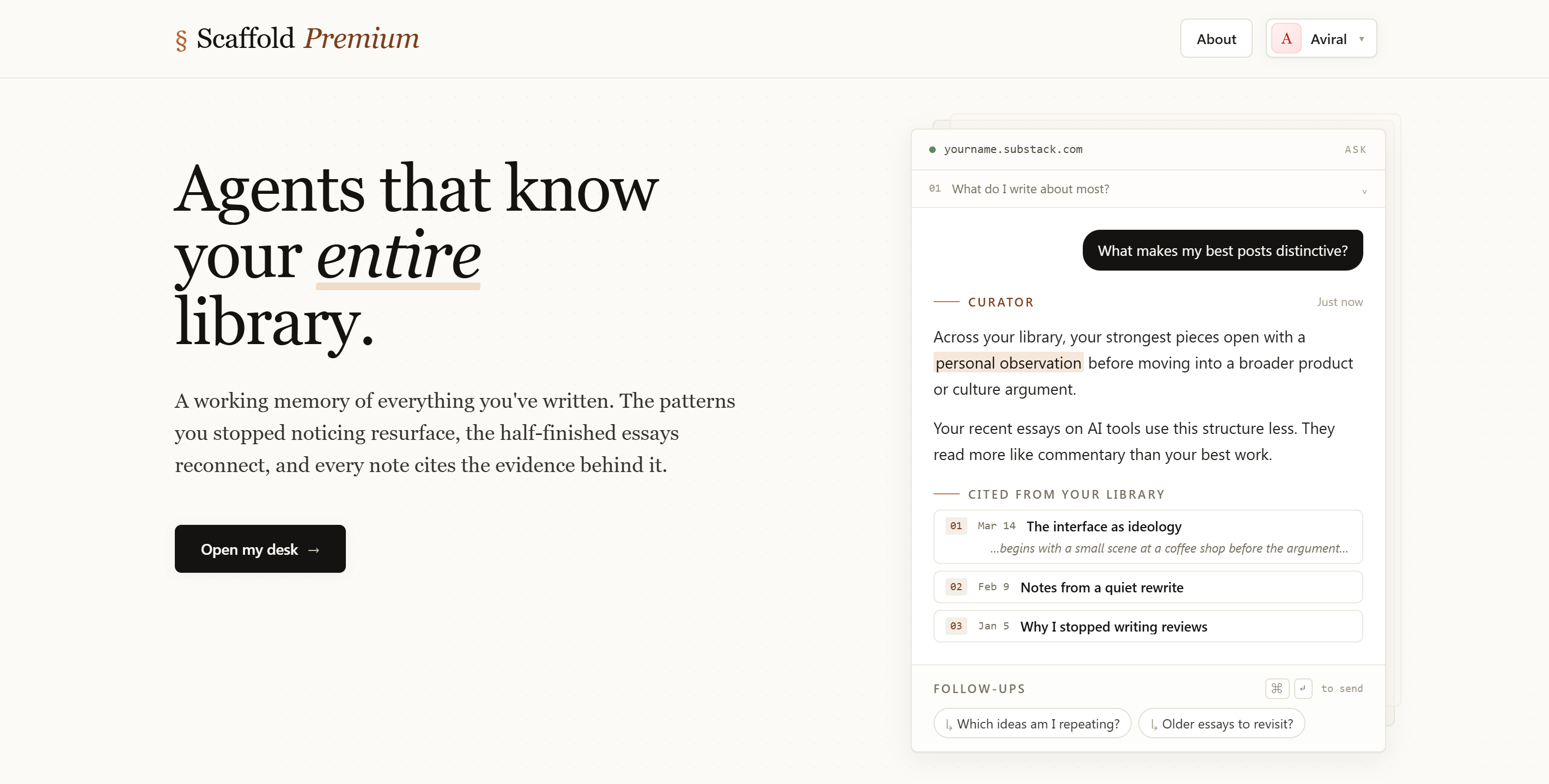
My writing process is pretty straightforward: I draft, rewrite, and revise until I’m happy with the final result. But I’ve found AI genuinely useful for a narrow set of tasks at the edges of that process. Catching sentences that don’t land, testing whether a rewrite improves on the original, mapping a new idea against articles I’ve already published to figure out whether I’m retreading old ground or saying something new.
The issue is that none of that compounds. Every conversation starts cold. Claude doesn’t know what I wrote last month. GPT doesn’t know how I think. With every new article, I’m manually re-establishing context by adding local PDFs and markdown files that should already exist somewhere, pasting in old pieces, re-explaining what I care about, starting from zero each time.
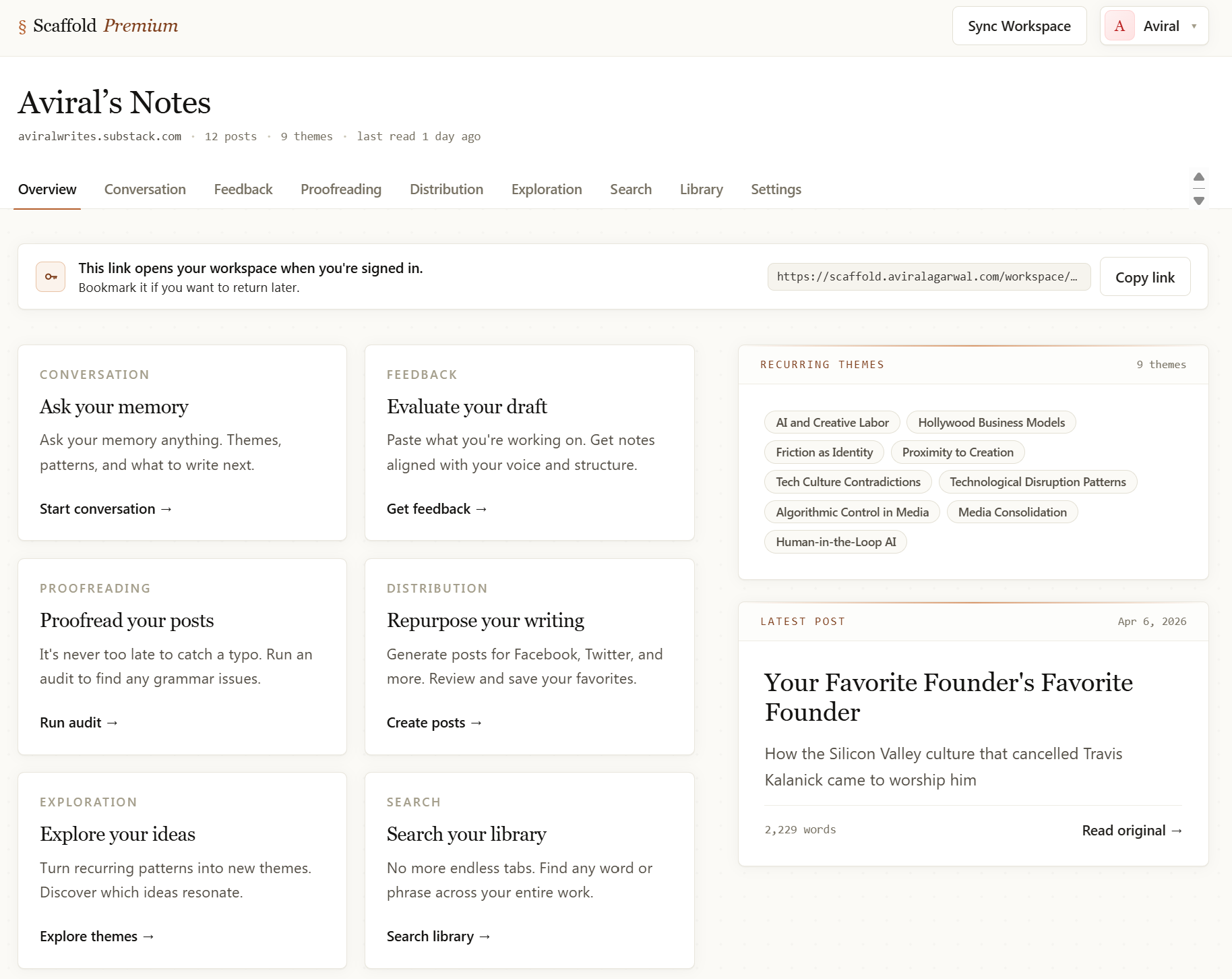
It seemed like a real problem worth solving. But in retrospect, I might’ve deluded myself into building an agentic AI SaaS wrapper like everyone else.
I thought an open source repository I’d publish on GitHub would take ten hours to complete.
But one week later, what started as a script running on my own machine had become a fully deployed application: multi-user authentication, a Neon Postgres backend, 300 commits, a Stripe integration for the one-in-a-million user who might be misguided enough to pay for a premium plan, multi-hour tweaks standardizing fonts and copy, and features connecting to platforms nobody asked for.
I told myself I was different from the 95 repository crowd, the endless one-shotters, the non-technical tech bros, because I was iterating over weeks. Because the hundreds of local tests I reviewed, the product specs I drafted, and the commit messages I wrote convincing myself each change mattered meant I had developed real judgment along the way. All without writing a single line of code.
But how good was my judgment? Did it feel good or was it actually good?
Because as I’ve sat down to write this article, I haven’t opened Scaffold once. Not to pull context from past pieces, not to grammar check, not to do any of the things it was explicitly built to do. The times I’ve needed help, I’ve gone back to my single-context window GPT and Claude threads.
If anything, using Scaffold would feel like forcing my writer self to please my builder self. And I’m not sure those two people want the same things.
A Builder’s Remorse
I was wrong about creative dopamine.
I defined it as active energy: the opposite of passive consumption that traps us in the scroll, the notification, the algorithmically engineered loop of social media. If you were creating instead of consuming, you were in the right category.
But I’ve realized the true variable in dopamine isn’t activity. It’s friction.
Every creative pursuit worth respecting has resistance built into it. Writing is hard because translating what you mean into words that carry the emotional weight you intended requires ingenuity, patience, and a tolerance for how bad your first attempts are. Music is hard because the gap between what you hear in your head and what you can produce is often enormous and humbling. Film is hard because you’re coordinating vision, execution, and collaboration across a hundred moving parts, most of which can fail on a day of bad lighting, a difficult actor, a set that won’t cooperate.
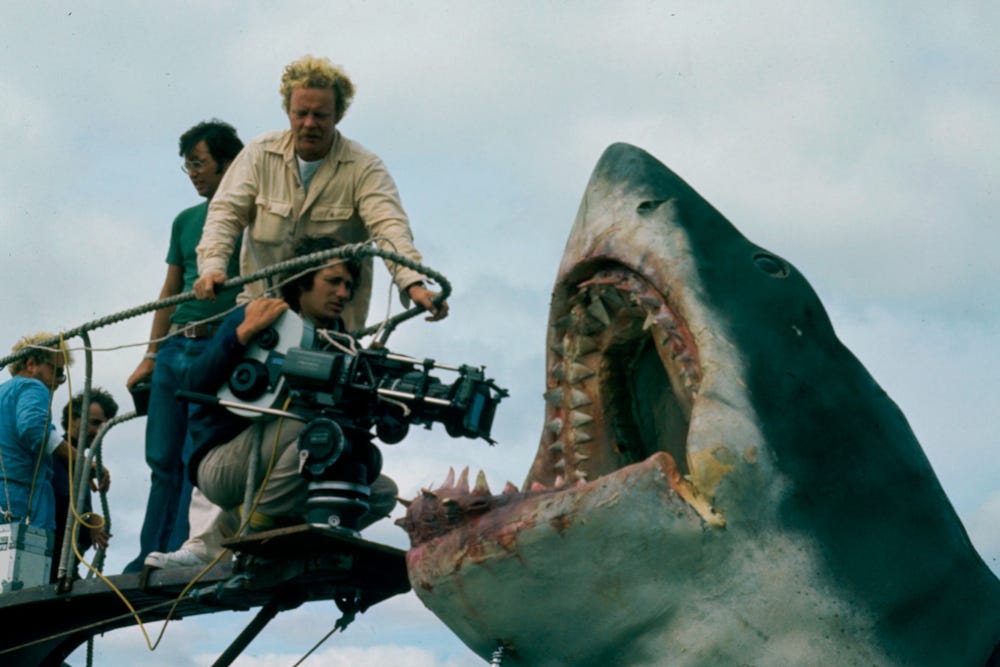
Steven Spielberg’s Jaws went so far over budget and schedule that Spielberg nearly lost the film entirely. The mechanical shark malfunctioned so often that Spielberg had to shoot around it, hiding it beneath the water for most of the movie. That constraint, born entirely out of things going wrong, is what made the film terrifying. You hear stories like that about almost every great production. The route to the best work is never meant to be clean.
When I was building Scaffold, I convinced myself the weeks of iteration counted as friction. The planning, the prompting, the agent runs I’d cancel halfway through and restart with a slightly different instruction. But I never owned the execution, only the direction.
When Spielberg was shooting Jaws, he couldn’t reprompt the shark in Google Veo. But anytime I ran into a wall with Scaffold, I could dissolve it with a rephrased prompt and a fresh context window.
The only thing stopping me was free will, a good night’s sleep, and unlimited token credits.
AI doesn’t just execute your ideas without question: it actively encourages them. It fills in gaps, resolves ambiguities in your favor, and rarely stops to ask whether what you’re building needs to exist.
You feel the pull of a long-term goal. You feel the satisfaction of watching something come together. You feel like you’re building something meaningful or even groundbreaking. But those feelings lie.
They’re not the same as creative dopamine. They’re dopamine abundance.
And the difference only becomes visible in retrospect, when you sit down to use the thing you made and realize you don’t want to.
When it’s easier than ever to go from 0 to 1, our judgment on what’s worth building, how to build it, and why gets cloudier with every tool that removes the friction of figuring that out.
That’s the irony of abundance: the more it builds for you, the less of it is actually you.
The Art Wars
In early June, Martin Scorsese announced a partnership with the AI startup, Black Forest Labs, to use their FLUX text-to-image generation model to create storyboards for his upcoming film.
Predictably, people were infuriated. Storyboard artists felt betrayed. If anyone was supposed to be the last line of defense against AI encroachment, studio cost-cutting, and the slow displacement of human craft, it was him. The director who spent decades hand-drawing his own storyboards. The director who infamously said superhero films aren’t real cinema.
Now spending the final years of a legendary career as an advisor to a German AI lab.
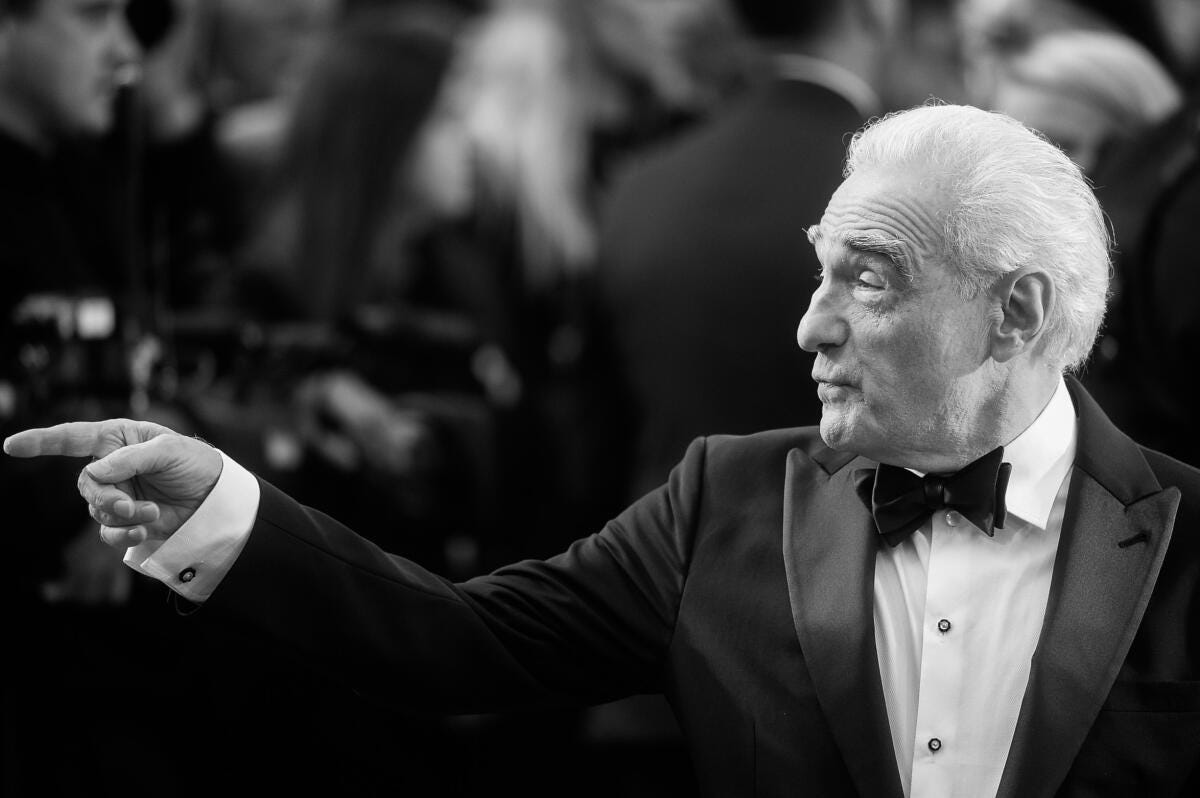
I don’t think Scorsese is wrong to pursue what he believes is a natural creative progression. In his announcement, he compared FLUX to using 3D on Hugo and de-aging technology on The Irishman. Tools that extended what he could communicate, not tools that replaced what he was communicating. Storyboards have always been instructional: a way to translate what exists in your head to your crew before the camera rolls. If AI makes that translation faster and clearer, it’s a fair perspective to believe nothing sacred has been lost.
And I don’t think the cinephiles burning their posters of Goodfellas and The Wolf of Wall Street are wrong either.
What fascinates me is that even Scorsese, arguably the most talented, meticulous, and film-literate director alive, is susceptible to the same pull the rest of us are. The promise that a tool will get you to your vision faster, with less friction, without losing what makes the work yours.
Even the greatest artists in the world are subject to dopamine abundance.
And what makes it so destructive is that it doesn’t announce itself. It arrives as a reasonable creative decision, and by the time you notice how far it’s taken you, the friction that defined your work is already gone.
Scorsese’s biggest critics aren’t angry out of deep empathy for the storyboard artist. They’re angry because they’re sensing a normalization, an unspoken agreement that this is fine, that this is just how things go now.
A storyboard tool becomes a scene visualizer. A scene visualizer becomes a shot generator. Each step feels incremental and defensible in isolation, and each step makes the next one easier to justify. The technology doesn’t have ambitions of its own, but dopamine abundance does.
It scales with whatever the tools allow.
What we’re heading toward probably isn’t a world of endless slop, though that’s still a real concern. It’s something more fractured and more contentious than that. A world where everyone draws their own line around what counts as legitimate creative work, and treats anyone on the other side of it as a threat.
Some will demand no AI involvement at any stage. Some will accept AI as a tool the way Scorsese claims he’s using it, provided the human vision remains central. And some will embrace fully AI-generated content without apology, optimized for the Instagram reel, the MrBeast attention span, the monkey-brain scroll that rewards sensation over substance.
None of these groups will agree, and none of them will stop growing. Some will shame each other. Some will organize around it. And if the job displacement ends up anywhere near as severe as the most pessimistic projections suggest, some of that frustration will find uglier outlets than an angry Letterboxd review.
It’s a future of art politics, more polarized and more personal than anything we’ve seen before.
And underneath all of it will be dopamine abundance.